Categories
- Packaging Boxes
- Folders Printing
- NCR Printing
- Greeting Cards Printing
- Calender Printing
- Sticker Printing
- Label Printing
- Tag Printing

Archives
- November, 2026
- October, 2026
- September, 2026
- August, 2026
- July, 2026
- June, 2026
- May, 2026
- April, 2026
- March, 2026
- February, 2026
- January, 2026
- December, 2025
- November, 2025
- October, 2025
- September, 2025
- August, 2025
- July, 2025
- June, 2025
- May, 2025
- April, 2025
- March, 2025
- February, 2025
- January, 2025
- December, 2024
- November, 2024
- October, 2024
- September, 2024
- August, 2024
- July, 2024
- June, 2024
- May, 2024
- April, 2024
- March, 2024
- February, 2024
- January, 2024
- December, 2023
- November, 2023
- October, 2023
- September, 2023
- August, 2023
- July, 2023
- June, 2023
- May, 2023
- April, 2023
- March, 2023
- February, 2023
- January, 2023
- December, 2022
- November, 2022
- October, 2022
- September, 2022
- August, 2022
- July, 2022
- June, 2022
- May, 2022
- April, 2022
- March, 2022
- February, 2022
- January, 2022
- December, 2021
- November, 2021
- October, 2021
- September, 2021
- August, 2021
- July, 2021
- June, 2021
- May, 2021
- April, 2021
- March, 2021
- February, 2021
- January, 2021
- December, 2020
- November, 2020
- October, 2020
- September, 2020
- August, 2020
- July, 2020
- June, 2020
- May, 2020
- April, 2020
- March, 2020
- February, 2020
- January, 2020
- December, 2019
- November, 2019
- October, 2019
- September, 2019
- August, 2019
- July, 2019
- June, 2019
- May, 2019
- April, 2019
- March, 2019
- February, 2019
- January, 2019
- December, 2018
- November, 2018
- October, 2018
- September, 2018
- August, 2018
- July, 2018
- June, 2018
- May, 2018
- April, 2018
- March, 2018
- February, 2018
- January, 2018
- December, 2017
- November, 2017
- October, 2017
- September, 2017
- August, 2017
- July, 2017
- June, 2017
- May, 2017
- April, 2017
- March, 2017
- February, 2017
- January, 2017
- December, 2016
- November, 2016
- October, 2016
- September, 2016
- August, 2016
- July, 2016
- June, 2016
- May, 2016
- April, 2016
- March, 2016
- February, 2016
- January, 2016
- December, 2015
- November, 2015
- October, 2015
- September, 2015
- August, 2015
- July, 2015
- June, 2015
- May, 2015
- April, 2015
- March, 2015
- February, 2015
- January, 2015
- Show All

- Free online proofs
- Fast turnaround
- Secure checkout
November 14, 2026
What is custom sticker printing?
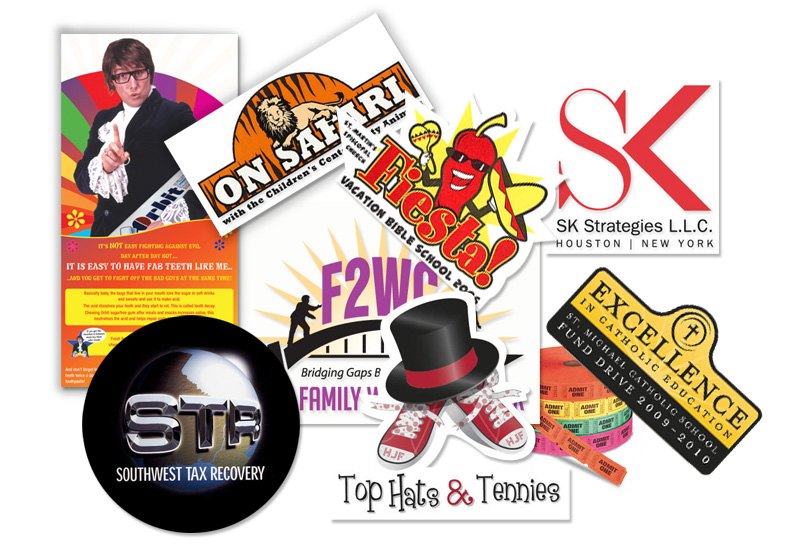
Custom sticker printing is the process of producing adhesive-backed graphics from your own artwork. A printer applies full-colour ink to a sticker material, adds an optional protective finish, then cuts each sticker to a specific shape. Because every order is made to your design, stickers work for logos, packaging seals, giveaways, product labels, vehicle graphics and event merchandise.
Stickers are popular with small businesses because they are inexpensive per piece, easy to hand out and stay visible for a long time. A single well-placed sticker on a laptop, bottle or bumper keeps your brand in front of people long after a flyer would have been thrown away. You can read more about why this works in our post on how custom stickers say a lot about your brand.
What types of stickers can you print?
The right sticker depends on where it will live. Here are the most common options and what each is best for:
| Sticker type | Best for |
|---|---|
| Die-cut stickers | Logos and shapes cut tightly around the artwork |
| Round stickers | Seals, product closures and simple brand marks |
| Roll stickers | High-volume use, packaging lines and fast hand application |
| Bumper stickers | Promotions, campaigns and fundraising |
| Waterproof stickers | Bottles, coolers, outdoor gear and anything that gets wet |
| Custom-cut vinyl decals | Windows, vehicles and smooth hard surfaces |
| Static clings | Temporary window displays with no adhesive residue |
| Warning stickers | Safety notices on equipment and products |
If you need a durable graphic for outside use, also look at durable outdoor decals. For product packaging you may prefer a custom label, which we compare in our label printing guide.
Which sticker material should you choose?
Material decides how long a sticker lasts and how it feels. As a rule of thumb:
- Vinyl is flexible, tear resistant and handles moisture and sunlight better than paper. It is the usual choice for outdoor, bottle and vehicle stickers.
- Paper gives a natural, printable surface that suits dry, indoor uses such as gift seals, envelopes and packaging inserts.
- Clear film lets the surface underneath show through, which creates a “printed directly on the product” look on glass and glossy packaging.
Pair the material with the right finish. A gloss finish makes colours look vivid, while a matte finish reduces glare and gives a softer, more premium feel. For stickers that must survive rain, spills or washing, read why waterproof stickers are worth choosing.
Die-cut, kiss-cut, sheets or rolls?
- Die-cut: each sticker is cut through the backing along the edge of your artwork, so it looks like a custom shape.
- Kiss-cut: only the sticker layer is cut, leaving the backing intact. This makes stickers easier to peel and handle, and is common for sheets.
- Sheets: several designs or copies on one backing sheet, ideal for giveaways and retail packs.
- Rolls: stickers wound on a roll for fast, repeatable application. See why use roll stickers if you apply them in volume.
How do you design stickers that look sharp?
- Use high-resolution artwork. Aim for 300 DPI at final size, or use vector files (AI, EPS, PDF) so edges stay crisp.
- Work in CMYK. Printers use CMYK inks, so designing in CMYK gives colours that match what you approve on the proof.
- Add bleed. Extend your background about 1/8 inch beyond the cut line so there are no white edges after cutting.
- Keep text inside the safe area. Leave a margin from the edge so no letters are trimmed.
- Keep it simple. One clear message, strong contrast and bold shapes read better on a small sticker than detailed illustrations.
- Test at actual size. Print your design on paper at the real dimensions and check that small text is still readable.
How can stickers promote your business?
- Seal boxes, bags and envelopes with a branded sticker to make every parcel feel finished.
- Include a free sticker with each order so customers can share your brand.
- Put a short URL or QR code on the sticker to send people straight to a landing page.
- Give event stickers to visitors at trade shows, fundraisers or club nights. Our guide to promoting your business with custom stickers has more ideas.
- Use vehicle and window stickers to turn everyday journeys into advertising.
Stickers also work alongside other printed pieces such as business cards and custom packaging boxes, so your branding stays consistent from the first impression to delivery.
How do you order custom stickers?
- Choose the sticker type on our sticker printing page.
- Select the size, quantity, material and finish.
- Upload your artwork, or ask our team for design help.
- Review and approve your free digital proof.
- We print, cut, pack and ship your order.
Not sure which option fits? Send us the details through our custom quote form and we will recommend a material and shape. Unfamiliar with a term? Check the printing glossary.
Sticker printing FAQ
How long do custom stickers last?
It depends on the material and where they are used. Vinyl stickers with a protective finish are designed to last for months or years outdoors, while paper stickers are best for dry, indoor use.
What is the difference between die-cut and kiss-cut stickers?
Die-cut stickers are cut through the backing along the shape of your design. Kiss-cut stickers are cut only through the sticker layer so the backing stays in one piece, which makes them easier to peel and handle.
What file format is best for sticker artwork?
Vector files such as AI, EPS or PDF are best because they stay sharp at any size. If you use a raster file, make it at least 300 DPI at the final size in CMYK colour mode.
Are custom stickers waterproof?
Vinyl stickers are generally water resistant, and our waterproof sticker option is made for items that get wet, such as bottles and coolers. Paper stickers are not waterproof.
Should I order stickers on a roll or on sheets?
Choose rolls if you apply many stickers quickly, for example on packaging. Choose sheets for giveaways, retail packs or when you want several designs together.
Can I get a proof before my stickers are printed?
Yes. Every order includes a free digital proof, so you can check colours, size and cut shape before production starts.
