

- Free online proofs
- Fast turnaround
- Secure checkout
November 10, 2026
Why flyers still work
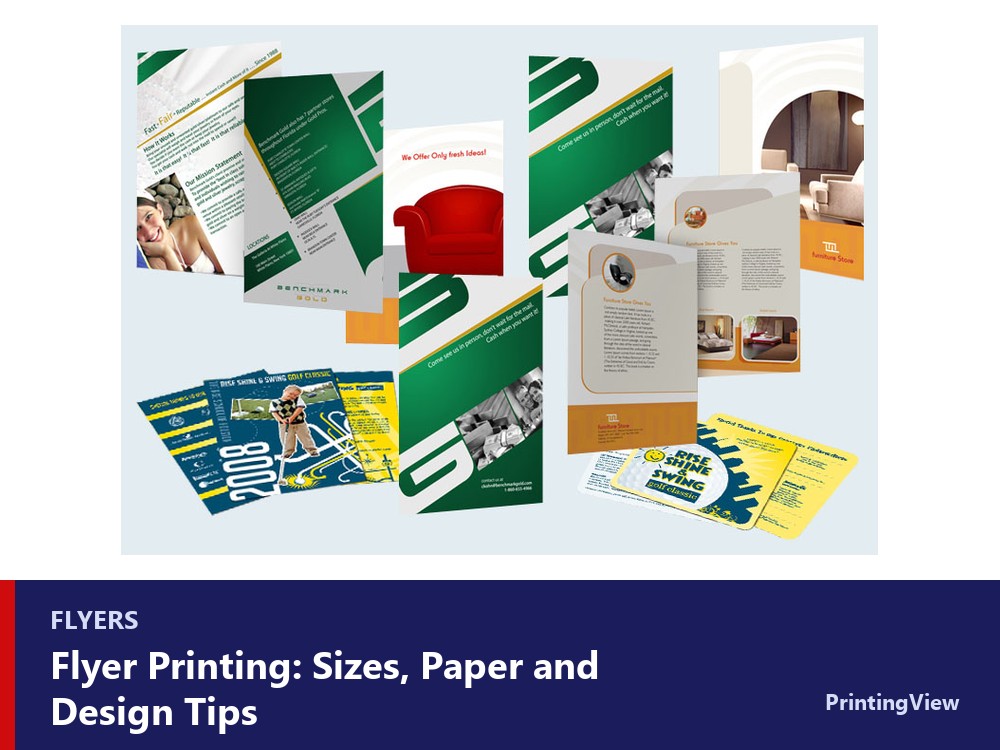
Flyers are inexpensive, quick to produce and easy to put in people’s hands. They suit local promotions, events, menus, openings, open houses and seasonal offers. Printed in volume, the cost per flyer is low, so you can reach many people without a large budget.
Flyers pair well with postcards for direct mail and with business cards you hand out at the same time.
Popular flyer sizes
| Size | Best for |
|---|---|
| 8.5 x 11 in | Detailed offers, menus, event information. See 8.5 x 11 flyers |
| 5.5 x 8.5 in | Easy hand-outs and counter displays |
| 4 x 6 in | Quick offers and inserts. See 4 x 6 flyers |
For a specific audience, such as events and venues, see our nightclub flyers.
Paper and finish
Lighter paper, around 80 to 100 lb text, is fine for mass hand-outs. Heavier cover stock feels more durable and premium. A gloss coating makes photos vibrant, while uncoated paper is easy to write on and suits a natural look. Consider printing on both sides if you want to add a coupon, a map or contact details.
How to write a flyer that gets action
- One goal. Decide on a single action: visit, call, scan or book.
- A bold headline that states the benefit in a few words.
- One strong image rather than several competing ones.
- The details people need: date, place, price or offer, and how to respond.
- A clear call to action, such as a web address or QR code that you can track.
Preparing print-ready files
- Build the artwork at the final size.
- Add 0.125 inch of bleed if colour reaches the edge.
- Keep text inside a 0.25 inch safe margin.
- Export a 300 dpi PDF with fonts outlined.
- Check spelling, dates and phone numbers before you submit.
Where to distribute flyers
- Hand them out at events and busy local spots, where permitted.
- Leave stacks at partner businesses, cafes and community boards.
- Add them to orders and parcels.
- Use door-to-door delivery for a local area; see door hangers as an alternative.
Always follow local rules about leafleting and posting in public places.
How to order flyers
- Open our flyer printing page and choose a size.
- Select paper, finish and quantity.
- Upload your artwork or ask for design support.
- Approve the free digital proof.
- We print and ship your flyers.
Unit cost falls as quantity rises, so if you will need flyers again, a larger run is usually better value. For bulk or unusual sizes use the custom quote form.
Frequently asked questions
What is the standard flyer size?
The most common size is 8.5 x 11 inches. Half letter (5.5 x 8.5 in) and 4 x 6 in are popular for hand-outs.
What paper should I use for flyers?
Light text-weight paper works for large hand-outs. Use heavier cover stock for a more durable, premium feel.
Should flyers be printed on both sides?
Two sides give you room for a coupon, map or details, and often cost little more. One side is fine for a simple message.
Do I need to add bleed to a flyer?
Yes, when the design runs to the edge. Add 0.125 inch of bleed so no white border appears after trimming.
How many flyers should I print?
Estimate how many people you can reach, then order a little extra. Cost per flyer falls as the quantity increases.
Can I get a proof before my flyers are printed?
Yes. A free digital proof lets you check layout, colours and text before production.
