

- Free online proofs
- Fast turnaround
- Secure checkout

November 12, 2026
- What makes ecommerce and retail labels different?
- Common labels for ecommerce brands
- Choosing label material and finish
- Sizing labels and choosing roll or sheet
- Barcodes, batch codes and required information
- Keep your brand consistent across the pack
- How to order custom labels
- Product Label Printing FAQ
What makes ecommerce and retail labels different?
Online and retail products are judged twice: first as a picture on a screen, then in a customer’s hands. A label has to look good in photographs, survive shipping and handling, and give customers the information they expect. That is a slightly different brief from a basic shop-shelf label, which is covered in our general custom label printing guide.
This guide focuses on brands that sell online, through marketplaces or in stores.
Common labels for ecommerce brands
- Product labels on jars, bottles, tubes and boxes.
- Seal and closure labels that show a package has not been opened.
- Thank-you and branding stickers on mailers and boxes.
- Barcode and SKU labels for stock control and retail scanning.
- Warning and instruction labels; see our warning stickers.
Choosing label material and finish
| Material | Best for |
|---|---|
| Paper | Dry goods, cartons and shipping boxes |
| Vinyl or polypropylene | Bottles, cosmetics, products exposed to moisture or oils |
| Clear film | Glass and glossy packaging for a “no label” look |
A gloss laminate makes colours strong in product photos, while a matte laminate gives a premium, low-glare look. For wet or chilled products, choose a durable material; see waterproof stickers.
Sizing labels and choosing roll or sheet
- Measure the flat area of the container, not the full circumference.
- Leave a margin from seams, curves and lids.
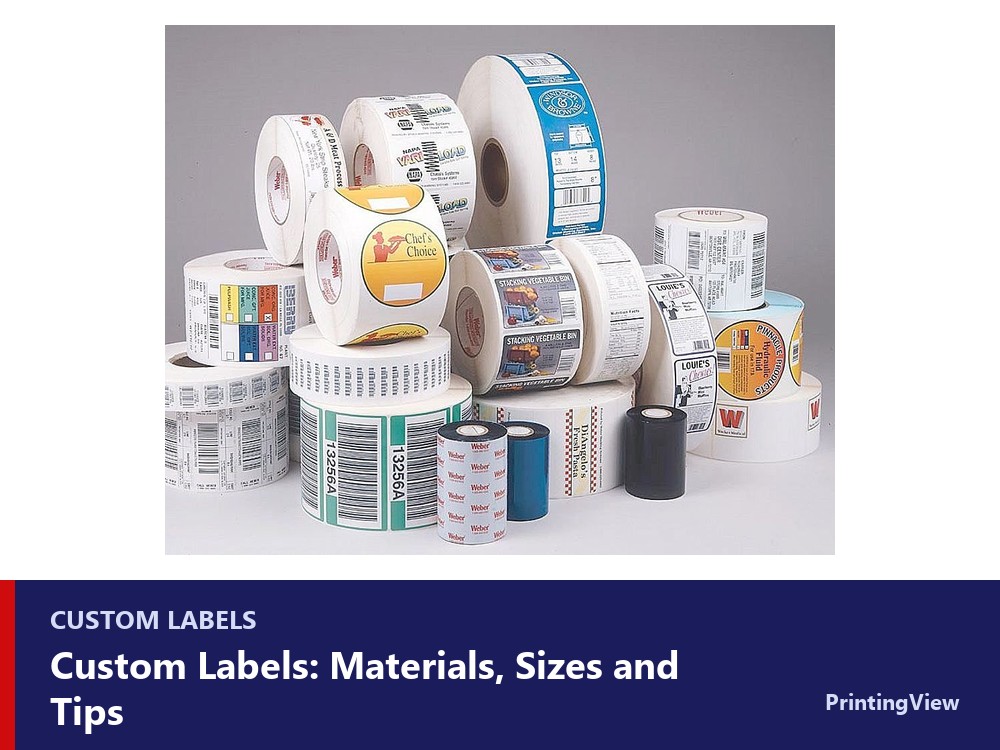
- Choose rolls if you apply labels in volume or with a dispenser. See roll stickers.
- Choose sheets for small batches and hand application. See labels on sticker sheets.
Barcodes, batch codes and required information
If you sell through retailers or marketplaces, you may need a scannable barcode, and many products need batch or date codes. Put barcodes on a clean, light background with generous quiet space around them, and test that they scan after printing. Requirements for ingredients, allergens, warnings and contact details depend on your product and market, so check the rules that apply to you. This is general guidance, not legal advice.
Keep your brand consistent across the pack
- Use the same layout with colour changes for each variety so customers recognise your range.
- Match label colours to your business cards, website and packaging.
- Pair labels with packaging boxes, bottle neckers and hang tags.
- Design the front label to read well as a small thumbnail on a product listing.
How to order custom labels
- Open our label printing page.
- Pick roll or sheet format, then size, shape, material and quantity.
- Upload artwork with a small bleed, or ask for design support.
- Approve the free digital proof.
- We print, cut and ship your labels.
For unusual shapes or larger volumes, use the custom quote form.
Frequently asked questions
What labels do ecommerce brands need?
Most need product labels, seal or closure stickers, barcode or SKU labels and branded stickers for mailers and boxes.
Which label material is best for bottles and cosmetics?
Vinyl or polypropylene is usually best because it resists moisture and handling better than paper.
Should I order labels on rolls or sheets?
Rolls are faster for regular volume or dispensers. Sheets suit small batches and hand application.
Do I need a barcode on my product label?
If you sell through retailers or some marketplaces, usually yes. Check the requirements for the channel you sell on.
How do I make labels look good in product photos?
Use strong contrast, a clear hierarchy and a gloss or matte finish that suits your brand, and test how the label looks as a small thumbnail.
Can I get a proof before my labels are printed?
Yes. A free digital proof lets you check size, colours and text before the full run.
